





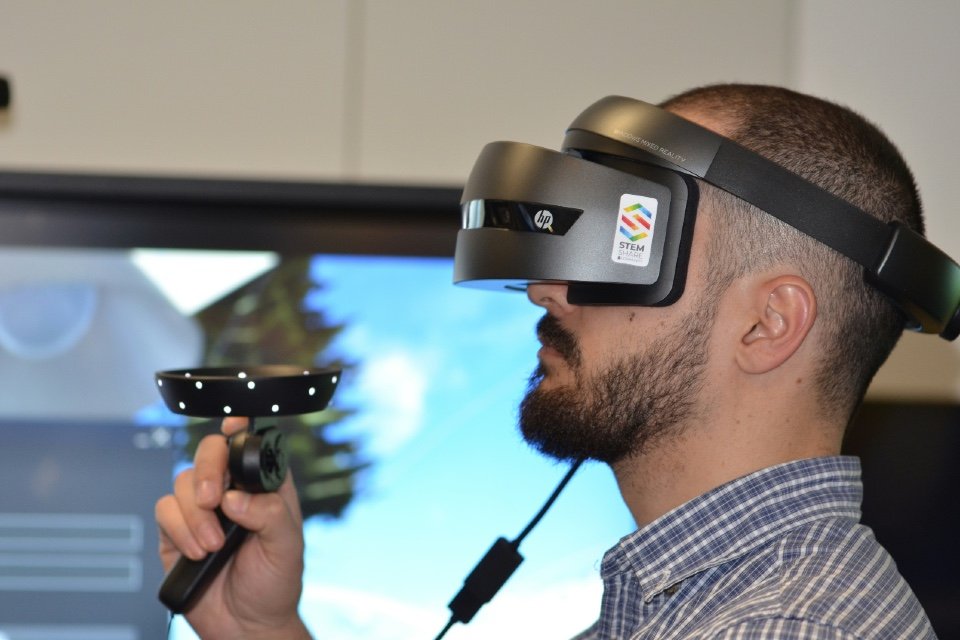
Traditional security training has always relied on manuals, presentations and classroom discussions, but that’s no longer enough. VR security training is helping organisations prepare for increasingly complex and unpredictable threats by placing employees in realistic, immersive scenarios before real incidents occur.
Compared with traditional classroom training, VR-based security training allows participants to practise decision-making and responses in lifelike environments, improving confidence, readiness and retention. These tools are bringing training to life, from intruder events and fire evacuations to cyber-physical incidents and crisis communication drills, creating a safer, more confident and better-prepared security workforce.
Benefits of VR security training for real-world readiness
Traditional classroom training remains valuable for teaching policies and procedures, but VR security training allows those procedures to be put into practice in realistic, repeatable environments. By combining immersive simulations with measurable performance data, organisations can better prepare teams for the pressures of real-world emergencies while identifying areas for improvement before an incident occurs.
Training for Real Reactions, Not Just Procedures
One of the biggest advantages of simulation-based learning is realism. Unlike traditional training, where employees are briefed on procedures, VR places participants in the middle of high-pressure scenarios, requiring them to make rapid decisions and communicate under stress.
For example, trainees might experience an unfolding intruder event, with dynamic lighting, sound and movement designed to mirror genuine conditions. Their responses, from radio communication to route selection, are recorded and analysed in detail, helping managers identify decision-making gaps and reinforce best practice.
This muscle memory training builds confidence and reduces hesitation during actual incidents, where every second counts.
Data-Driven Improvement and Measurable Outcomes
Simulation technology doesn’t just replicate reality, it quantifies it. Each training session generates data points on reaction times, communication accuracy, compliance with protocols and situational awareness.
This enables organisations to measure competency objectively and track progress over time, something difficult to achieve with classroom-based assessments.
Advanced systems can even simulate multi-departmental responses, allowing security, facilities, IT and HR teams to train collaboratively, building the kind of integrated resilience today’s hybrid workplaces demand.
Customisable Scenarios for Every Environment
Modern VR and simulation tools are highly adaptable. They can be configured for different environments, from hospitals and schools to corporate offices and transport hubs, reflecting each site’s unique layout and risk profile.
Digital twins of facilities can be created to ensure employees train in precise replicas of their own workplaces, enhancing familiarity and engagement.
The Future of Security Training Is Immersive
As budgets tighten and compliance requirements grow, scenario-based learning delivers measurable ROI: fewer incidents, faster response times and a stronger safety culture.
By combining realism, analytics and repeatability, VR and simulation training are helping security leaders move from reactive to proactive preparedness, ensuring teams don’t just know what to do, but have already done it.
Are you searching for security training solutions for your organisation? The Total Security Summit can help!
Photo by Laurens Derks on Unsplash